

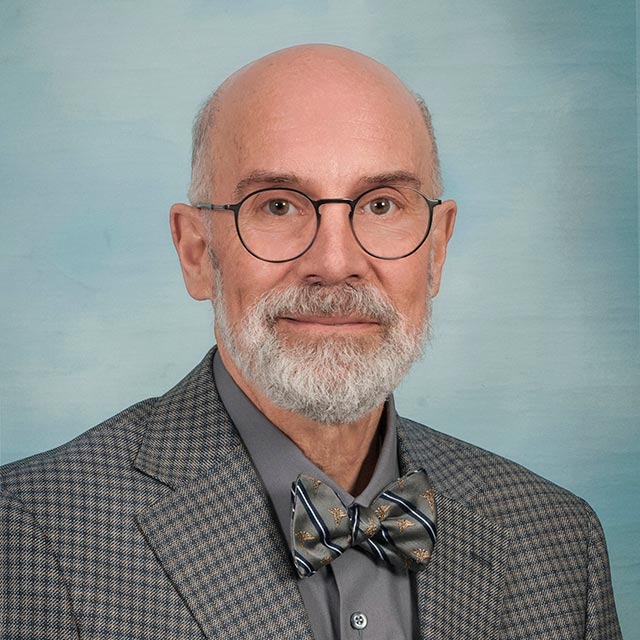
Northern Montana Health Care (NMHC) is proud to welcome a new provider to the Northern Montana Sletten Cancer Center, marking the first time in over two years the center has had a permanent, on-site physician dedicated to serving patients in our community.
Dr. Thomas “Tom” J. Reid III, MD, PhD, FACP, brings extensive experience to the Hi-Line, strengthening our commitment to providing high quality cancer care close to home.
Dr. Reid said he is excited for the opportunity to build up the program at the center.
“The biggest thing is for people to know that you’re going to get the best oncology and hematology care right here at home with state-of-the-art, cutting-edge cancer care,” he said.
NMHC Chief Nursing Officer Sarah Spangler said having Dr. Reid as a permanent doctor at the cancer center provides a great benefit for local patients.
“We are so happy to welcome Dr. Reid to our community and to the Sletten Cancer Center,” she said. “His compassion, skill, and dedication to patients will be felt far beyond our cancer center walls.”
Dr. Reid was born at Fort Dix in New Jersey and his family moved around a lot as he grew up, as his father served in the U.S. Air Force. They spent quite a bit of time in England, Germany, and Texas before settling in Harrisburg, Pennsylvania, he said.
Dr. Reid earned his Bachelor of Science in microbiology at Pennsylvania State University and his PhD in biochemistry at Purdue University. He then earned his Doctor of Medicine degree at the Uniformed Services University of the Health Sciences in Bethesda, Maryland. He completed his internship and residency in internal medicine and a fellowship in hematology-medical oncology at the Walter Reed Army Medical Center in Washington, D.C.
He then went on to work at the Walter Reed Army Institute of Research from 1991 to 2004, serving as Chief of Blood Research during his final three years there. From 2004-2008, Dr. Reid was Chief of Hematology-Medical Oncology at Walter Reed Army Medical Center, also serving as chair of the Cancer Care Committee, co-chair of the Institutional Review Board and principal investigator for Cancer and Leukemia Group B, a cooperative group for cancer clinical trials.
Dr. Reid retired from the U.S. Army as a full colonel after 27 years in the Army Medical Corps. He then practiced for three years in Conway, Arkansas, followed by 18 months in Baltimore, Maryland, and eight years in South Bend, Indiana, which also put his family closer to his mother-in-law, Dr. Reid said. At Memorial Hospital of South Bend, he spent eight years building a cancer diagnosis and treatment program,ultimately growing it into a successful initiative that became part of the Mayo Clinic Care Network.
After the passing of his first wife in 2017 and his mother-in-law, he found he no longer had close family connections in the area. He soon began looking for new opportunities and was notified of an opening in Cody, Wyoming. Dr. Reid said he had fallen in love with being in a smaller town when he practiced in Conway, so he decided to interview for the position at Cody Regional Hospital as medical director of the Big Horn Basin Cancer Center.
He had never been out West and just loved it.
“I made a mistake,” Dr. Reid said. “I assumed Cody wouldn’t have an airport and I drove all the way along the Beartooths, and I just fell in love; I said, ‘This is amazing.’”
During his eight years in Cody, he built a nationally recognized rural cancer program. Knowing the program in Cody had grown strong, when Dr. Reid was told of the opportunity in Havre, he decided to interview for the job. He said he was impressed with the center and its staff and decided he wanted to come to practice on the Hi-Line.
“Here’s the thing,” Dr. Reid said. “To bring really good, strong medical oncology to a rural setting is really an asset to the community. That’s what I did in Cody, and here’s an opportunity for me to do the same thing In Havre.”
He said having a local cancer center providing university-level care is an immense benefit.
“You can’t get any better care than you can locally because we know you, we know your family. It’s all part of your care,” Dr. Reid said. “Yes, you get good care at university, but you travel hundreds of miles and they don’t know you like we do in the community, so there’s a special tier of care.”
Dr. Reid said he and his wife, Cindy, are looking forward to being in Havre.
“We loved the drive up here,” he said, “we actually just loved the ruralness of it, and knowing that rural communities need top-quality care just like the big cities already have, that’s our goal, to improve on that.”
He and his wife will be living in Havre – they have three adult sons who are on their own – and will be bringing other members of the immediate family — six Scottish Deerhounds, a Chihuahua, two Scottish Highland steers, and several rescue animals –- three burros, two horses, and a mule.
Dr. Reid said he is looking forward to working with the community.
“This is my landing place,” he said. “I’m not going anywhere. I’ve landed here.”